

Sir Alexander Fleming was one of the most influential scientists of his time. He is best known for his Nobel Prize-winning discovery of the antibiotic penicillin in 1928. Penicillin has saved millions of people’s lives. Fleming was born in Scotland on August 6, 1881.
He completed a course at St Mary’s Hospital Medical School in Paddington, London. After which he joined the research team at St Mary’s where was the assistant to a bacteriologist, Sir Almroth Wright.
Alexander Fleming Facts for Kids
- Alexander Fleming was born in Scotland in 1881.
- He studied medicine and became a bacteriologist.
- He served in World War I as a medical officer.
- In 1928, he discovered penicillin by accident.
- Penicillin is a type of antibiotic.
- His discovery revolutionized medicine.
- He received the Nobel Prize in 1945.
- The prize was for his discovery of penicillin.
- He worked at St. Mary’s Hospital in London.
- Fleming died in 1955, aged 73.
Penicillin
Scottish scientist Alexander Fleming discovered penicillin in 1928, a major breakthrough in medical history. This antibiotic fights harmful bacteria and saves lives. Fleming found that Penicillium notatum mold accidentally contaminated a petri dish, killing surrounding bacteria.
Investigating the mold led to penicillin’s development, which now treats various bacterial infections and has saved many lives. Fleming’s curiosity and observation skills allowed for this medicine’s creation, benefiting people of all ages and playing a critical role in healthcare today.
Antibiotics
Scottish scientist Alexander Fleming made a groundbreaking discovery in 1928 when he found a mold called Penicillium notatum that could kill bacteria. This led to the development of antibiotics, essential medicines for treating bacterial infections like strep throat, ear infections, and pneumonia.
Fleming’s discovery has saved millions of lives and made surgeries safer, earning him a Nobel Prize in Physiology or Medicine in 1945. Researchers continue to develop new antibiotics to fight antibiotic-resistant bacteria, perpetuating Fleming’s legacy.
Microbiology
Alexander Fleming was a Scottish microbiologist who made a groundbreaking discovery in medicine. In 1928, at St. Mary’s Hospital in London, he accidentally discovered penicillin, a substance that could kill harmful bacteria. This led to the development of antibiotics, which have saved numerous lives by treating bacterial infections.
Fleming’s work earned him several awards, including the 1945 Nobel Prize in Physiology or Medicine, shared with scientists Howard Florey and Ernst Boris Chain. Today, he is remembered as a pioneer in microbiology and a hero in medicine, helping to protect global health.
Staphylococcus
A brilliant scientist, Alexander Fleming, made a groundbreaking discovery in 1928 that has protected the health of people of all ages. He discovered the powerful antibiotic, penicillin, which is effective against various bacterial infections.
Penicillin combats dangerous bacteria such as Staphylococcus, which causes illnesses ranging from minor skin infections to severe diseases like pneumonia and meningitis. Fleming’s discovery allows doctors to treat staph infections effectively, ensuring a quick recovery and maintaining overall health.
Nobel Prize in Physiology or Medicine
Scottish scientist Alexander Fleming discovered penicillin in 1928, earning him the Nobel Prize in Physiology or Medicine in 1945. This antibiotic revolutionized medicine and saved many lives. The prize was shared with Sir Howard Florey and Ernst Boris Chain, who helped develop penicillin for widespread use. Fleming’s discovery led to the development of other antibiotics and highlights the significance of curiosity, persistence, and collaboration in scientific discoveries.
Bacteriology
Scottish scientist Alexander Fleming made a groundbreaking discovery in bacteriology, greatly impacting medicine and saving lives. In 1928, he discovered Penicillium notatum, a mold producing a substance that could kill harmful bacteria.
Named penicillin, this was the world’s first antibiotic. Before penicillin, even minor infections could be deadly due to the lack of effective treatment. Fleming’s discovery revolutionized medicine, enabling treatment and cure for many bacterial infections. Today, penicillin and other antibiotics are crucial in healthcare, protecting people from infections and illnesses caused by harmful bacteria.
Fleming’s work in bacteriology has saved millions of lives, earning him a well-deserved spot in scientific and medical history.
Howard Florey and Ernst Boris Chain
Scottish biologist Alexander Fleming discovered the antibiotic penicillin in 1928. The substance’s true potential was later realized through the work of Howard Florey and Ernst Boris Chain. These scientists developed a method to produce and purify penicillin in large quantities for medical use.
In 1945, Fleming, Florey, and Chain were awarded the Nobel Prize in Physiology or Medicine. Their efforts led to the development of modern antibiotics, revolutionizing medicine and saving lives worldwide.
Pathology
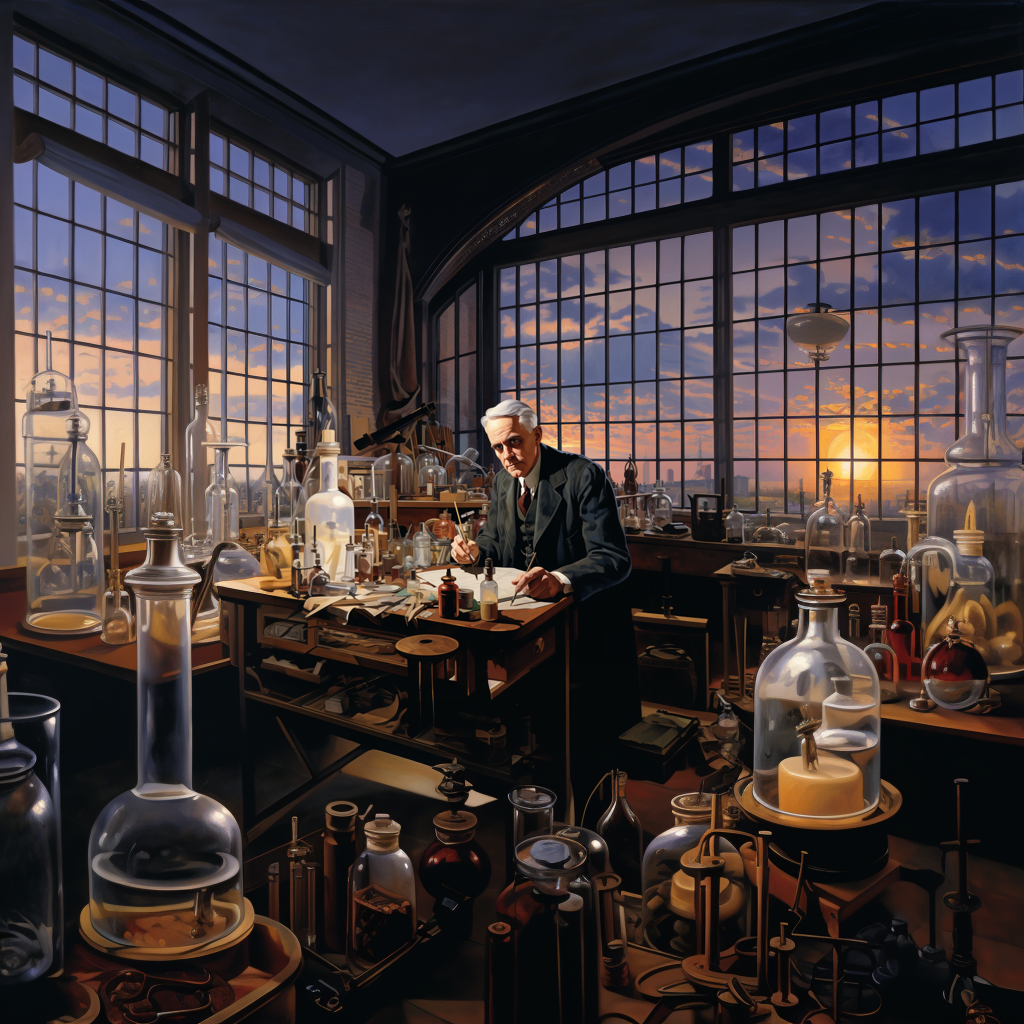
Scottish biologist Alexander Fleming made a crucial discovery in pathology, significantly impacting medicine. In 1928, at St. Mary’s Hospital in London, he found the world’s first antibiotic, penicillin, which has saved countless lives. He observed that Penicillium notatum mold produced a substance killing various harmful bacteria.
This discovery revolutionized bacterial infection treatment and established modern antibiotics, vital for combating diseases. Fleming received the Nobel Prize in Physiology or Medicine in 1945 for his work in pathology and remains a significant figure in medical history. His penicillin discovery continues to inspire young scientists and pathologists in medicine.
Infectious Diseases
Alexander Fleming was a notable scientist who greatly impacted medicine, especially in infectious diseases. Before his discovery, many suffered from harmful bacterial infections. In 1928, he found penicillin, produced by Penicillium mold, which became the first antibiotic.
This allowed doctors to treat bacterial infections more efficiently and save lives. His work led to the development of various antibiotics used today against numerous infectious diseases.
History of Medicine in the 20th Century
In the 20th century, Alexander Fleming, a Scottish biologist, discovered penicillin, a life-saving substance. In 1928, he accidentally found that Penicillium notatum produced an antibiotic substance capable of killing various bacteria. This revolutionized medicine, making it possible to treat and cure many bacterial infections that were once fatal.
Penicillin became widely available during World War II, saved countless lives, and earned Fleming the Nobel Prize in Medicine in 1945. Today, he is remembered as a pioneering figure in medical history whose innovation laid the foundation for modern antibiotics and changed medicine.
Quick Facts
- Alexander Fleming received his licentiate from the Royal College of Physicians in 1906 and then he joined the Inoculation Department.
- Fleming served as a member of the Territorial Army from 1900 to 1914 in the London Scottish Regiment.
- He also served in battlefield hospitals when World War I broke out.
- In 1928, he was appointed as a professor of bacteriology in 1928 at the University of London.
- He was knighted as Knights Bachelor in 1944 and became Sir Alexander Fleming.
- Fleming also worked in a shipping office for four years in his initial days.
- He studied the different properties of a strain of staphylococcus bacteria.
- He used to leave bowls with bacteria cultures standing by his worktable and this led to his discoveries.
- Ernst Boris Chain and Edward Abraham discovered how to isolate penicillin and increase its potential.
- This is the reason why they shared the Nobel Prize with Fleming which was awarded in 1945.
- Fleming also demonstrated that antiseptic agents were only useful in treating superficial wounds, but were harmful when applied to deep wounds.
