
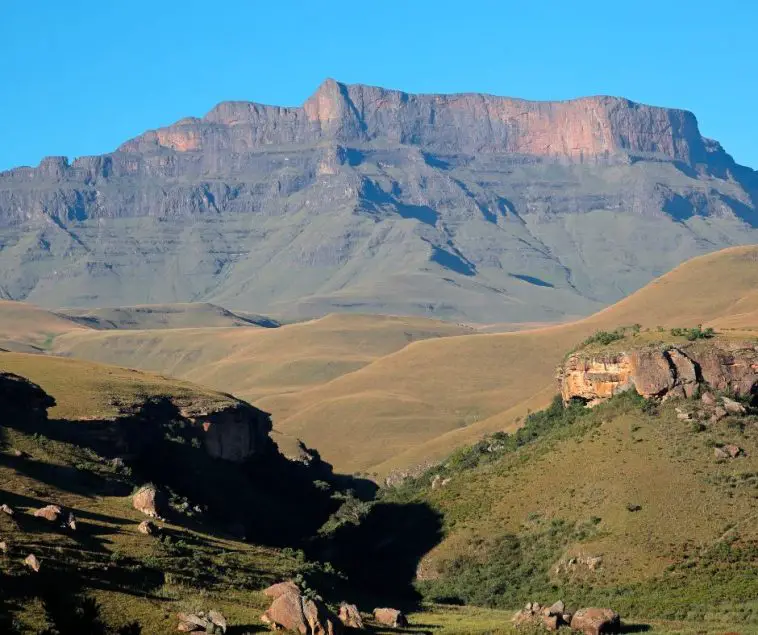
The Drakensberg Mountains are a magnificent natural formation in South Africa. The impressive mountain range spreads across the Eastern side of the country and provides much-needed natural beauty to an otherwise vast landscape.
The name “Drakensberg” actually translates to “Dragon mountain,” illustrating its majestic appearance from afar and up close when exploring the park.
This mountain range offers unparalleled views of South Africa and an incredible glimpse into what nature can truly create.
At the peak of certain locations, it takes your breath away with its stunning nuances and hidden gems. Through hikes, camping, and even more extreme activities such as abseiling, everyone is able to appreciate this destination in their own way.
It’s a place that remains untouched and largely undiscovered by many resulting in immense peace and tranquillity – unlike any other!
Drakensberg Mountains Facts for Kids
- The Drakensberg Mountains are a mountain range in South Africa.
- They are the highest mountain range in Southern Africa.
- The Drakensberg Mountains are home to many species of plants and animals.
- The highest peak is Thabana Ntlenyana, at 11,424 feet (3,482 meters).
- The mountain range is home to many hiking trails and other outdoor recreational activities.
- The Drakensberg Mountains are a UNESCO World Heritage Site.
Drakensberg Mountains Location
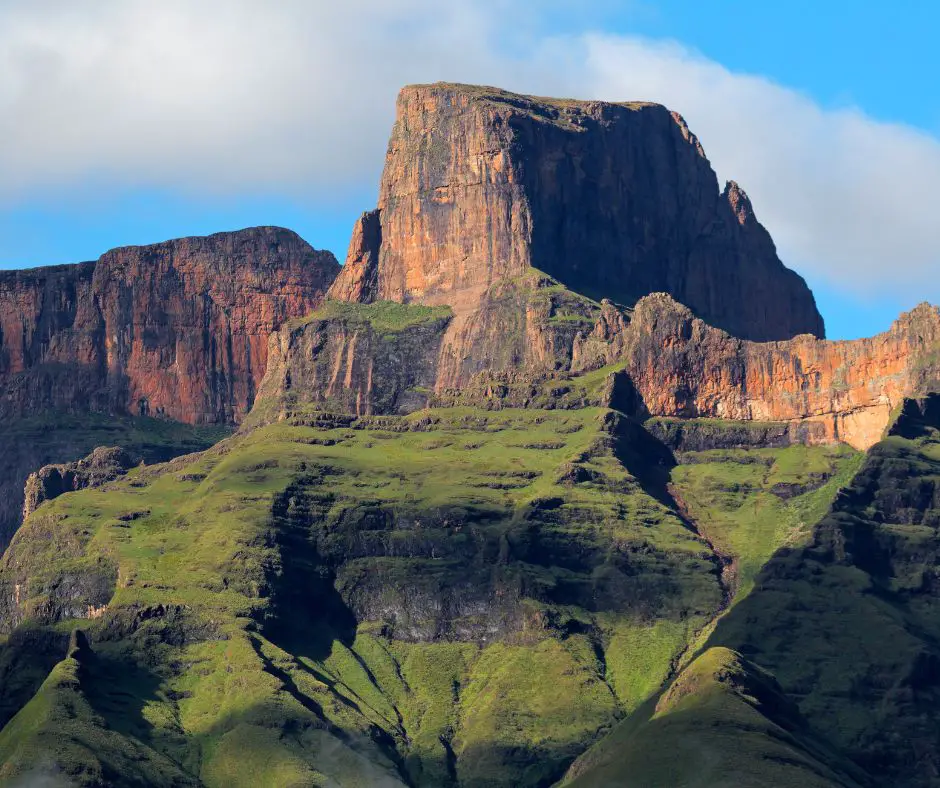
The beauty of the Drakensberg range is no secret. With its staggering peaks and immense valleys, it is an awe-inspiring sight. But beneath its power lies a hidden treasure: a rich history filled with stories of ancient cultures, secrets, and legends.
It’s an extraordinary place to explore – whether traversing the winding mountain trails or absorbing the thousand-year-old artwork from bushman paint on nearby caves. It’s where travelers can lose themselves among wildflowers and Bushveld trees that bring life to this beautiful region.
The Drakensberg lures visitors with its startling natural wonders – towering cliff faces, mysterious rivers, far-stretching plateaux, and snow-capped landscape in winter months that make it unique in Southern Africa and beyond.
Visit this majestic place for an exotic journey you won’t soon forget. Its fascinating secrets can be found everywhere you look – if you’re lucky enough to find them! The locals will tell you there’s something magical about these mountains, and who knows what hidden surprises await your exploration?
Drakensberg Mountains: Geographic Details
The Drakensberg mountain has a captivating story of its own. Formed some 182 million years ago, this beloved African mountain range has earned its name through the Dutch settlers – Drakensberg translates to ‘dragon mountains.’ Like an ancient dragon’s castle, the Eastern Cape of Drakensberg is home to three remarkable African mountain ranges and a number of unique wildlife.
From vast, rich fauna, including black eagles and bearded vultures, to plants so special even few know of them – Drakensberg is an adventure you don’t want to miss. Steeped in history and tested by time, it stands as a symbol of nature’s certainty in change, unharmed by human engineering.
To appreciate all that this magical place offers, you have to start by understanding its past. An incredible rock formation that, for thousands of years, undergoes gradual transformation under the pressure of time and gravity – yet never really breaks apart. It is an infinite circle where stories are written over the course of millions of years. Not many get to witness such marvels these days!
Significance Of Drakensberg Mountains
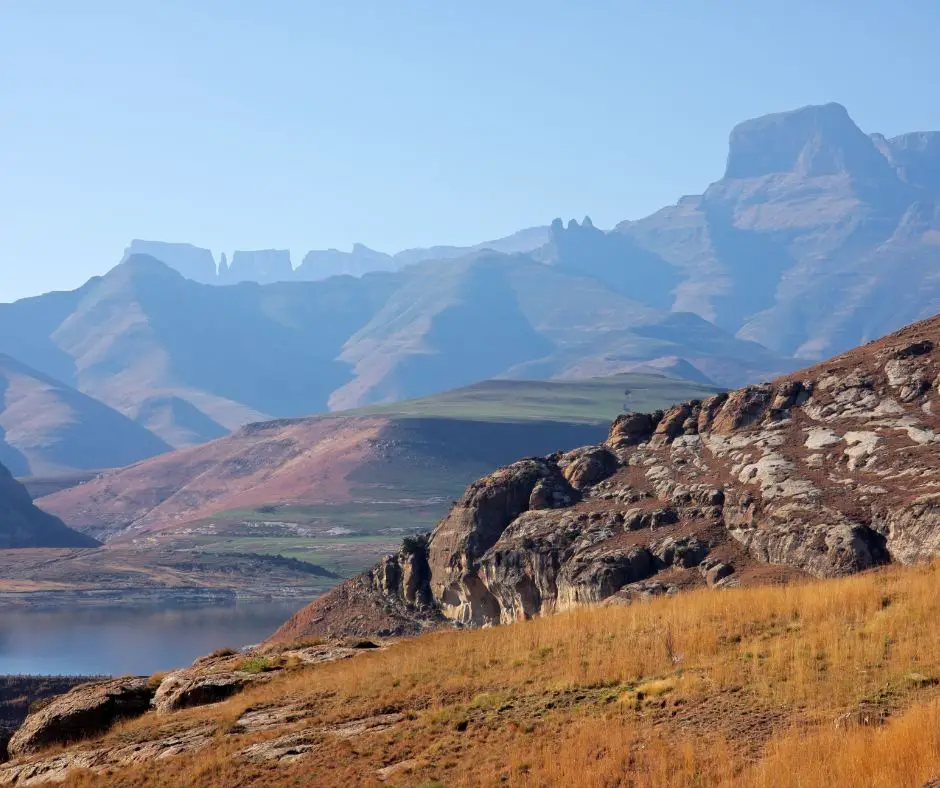
The Drakensberg mountains beckon the curious adventurer to explore its beauty and mystery. To seek out the hidden, untamed parts of southern Africa that have yet to be uncovered.
Going beyond what we now know, traveling further south than ever before. While those on the northern side are well-trodden, there remain so many untouched wonders awaiting discovery.
It’s not just a quest to uncover lost knowledge – it’s something far more captivating: standing face-to-face with history in all its grandeur, from rich rock paintings steeped in ancient tradition to consisting of secluded waterfalls right at sea level. Every piece of this jigsaw puzzle continues to hold secrets within its rhythmic curves and awe-inspiring peaks – like the one found atop Champagne Castle.
It’s here at the Drakensberg that you can witness masterpieces of nature in motion. A solitary mountain range envelops an enclave of natural elements that never cease to fluctuate and form new images and stories for us all to explore and enjoy.
Daring exploration has always been born from courage, risk-taking, and reward, but for what lies beyond these majestic mountains, intrepid explorers must also be brave enough to take three steps: question their beliefs, accept uncertainty and never be afraid to discover something remarkable in the unfamiliarity it brings with it.
Drakensberg Mountains Ecology
The mountain of Drakensberg holds breathtaking beauty in its postcard-esque views. With the southern side of this mountain serving as an important and rich native site to the Sani Pass, tourists look forward to traveling there.
But it’s not all pretty scenery and warm weather. Climb higher up, and you’ll experience a wetter climate and a reduction in temperatures, with snowfall frosting the mountainous peaks during colder months.
Take heart! The incredible range of greenery and grassy slopes on higher elevations ensure it’s always time for a break or much-needed refreshments. Even after that level, you’re sure to get some rare glimpses of what South Africa has to offer – a treeless expanse but for streams trickling down from the upper mountaintops and various endangered species spread across plains over lower slopes blanketed in Oat-grass.
Be warned, though: you are, after all, roaming wilderness here – so don’t be surprised if you find yourself face-to-face with any one of 20 known species of snakes in these parts!