
Hatshepsut was an ancient Egyptian pharaoh who ruled during the 18th dynasty. She is known for being one of the few female pharaohs in Egyptian history. Hatshepsut’s reign was marked by prosperity and stability, and she is credited with expanding trade and building impressive monuments, including her mortuary temple at Deir el-Bahari.
Despite her successful reign, Hatshepsut’s legacy was largely erased by subsequent pharaohs, and her monuments were defaced or destroyed. It was not until the 19th century that her true importance and achievements were recognized by historians.
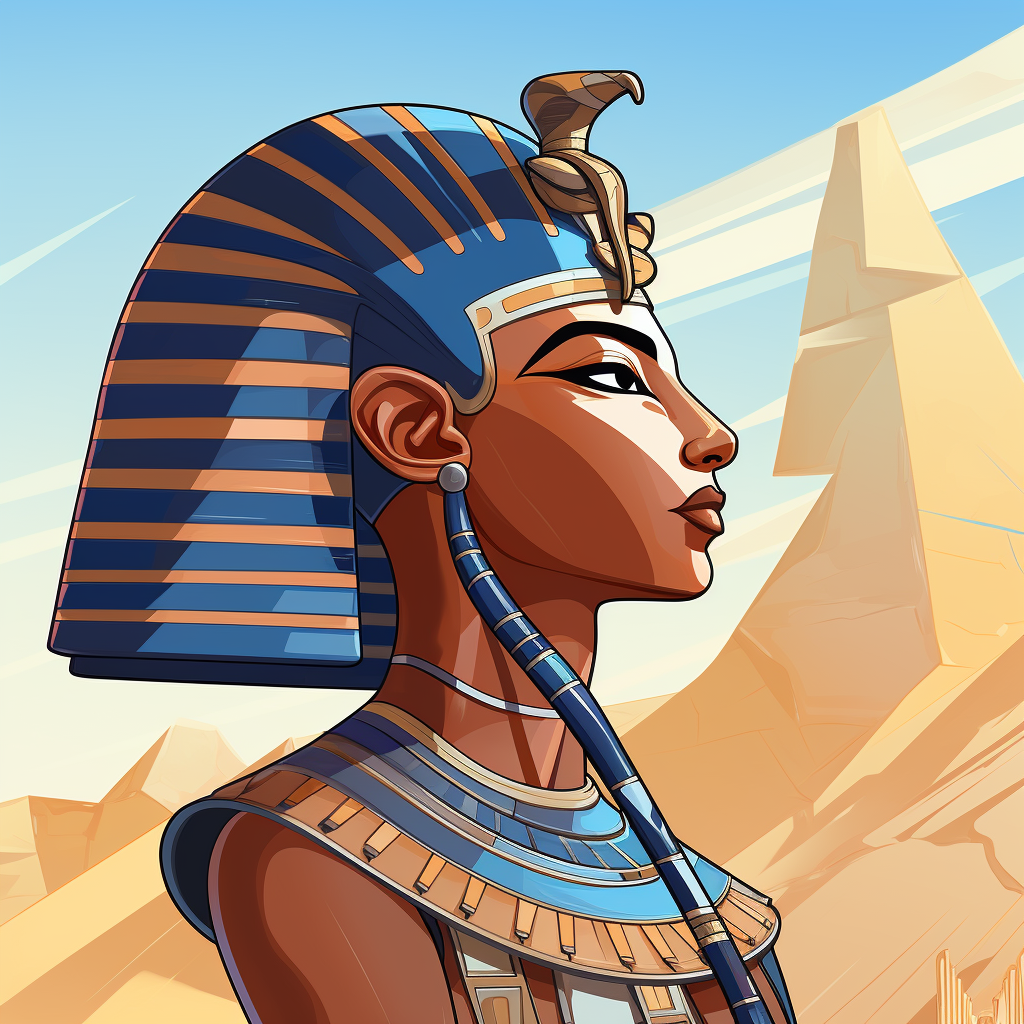
Hatshepsut Facts For Kids
- Hatshepsut was Egypt’s second female pharaoh.
- Ruled during the 18th dynasty.
- Reigned for roughly 22 years.
- Known for peace and prosperity.
- Commissioned the Deir el-Bahri temple.
- Often depicted as a male ruler.
- Was co-regent with Thutmose III.
- Her name means “Foremost of Noble Ladies.”
- Initiated trade expeditions, like to Punt.
- Her mummy was identified in 2007.
Hatshepsut’s reign as Pharaoh
Hatshepsut’s reign as Pharaoh was truly unique. She was one of Egypt’s few female rulers and didn’t just sit on the throne. She ruled with authority and determination, breaking the norms and setting new standards for female leaders. Hatshepsut wore the traditional male Pharaoh’s kilt, false beard, and head cloth. Her reign was marked by peace and prosperity, and she oversaw great architectural advancements, including the construction of magnificent temples. Hatshepsut was a true trailblazer, changing the course of Egypt’s history. So, remember her not just as a Pharaoh, but as a powerful woman who defied expectations and left an indelible mark.
Architecture and monuments of Hatshepsut
You’d be amazed at the architectural feats and monumental structures that this ancient queen commissioned. Hatshepsut’s building projects were grand, transforming the landscape of Egypt and leaving a lasting legacy.
The crowning jewel was the Hatshepsut temple, also known as Deir el-Bahri. This architectural marvel showcases the queen’s ambitious vision.
Here’s a snapshot of what she achieved:
- The majestic Hatshepsut temple at Deir el-Bahri, an architectural masterpiece.
- Numerous building projects in Karnak, including magnificent obelisks.
- Restoration of the Precinct of Mut, a testament to her dedication to the gods.
- Construction of a trading port at the Red Sea, expanding Egypt’s influence.
- Establishing a network of roads, facilitating trade and communication.
Today, we marvel at these structures, reminders of an era of grandeur and ambition.
Role of Hatshepsut in Egypt’s golden age
It’s truly fascinating to understand her role in sparking Egypt’s golden age. As you delve deeper into the history of Egypt, you’ll see how Queen Hatshepsut, one of the most powerful women in the ancient world, paved the way for the prosperity of this civilization.
She didn’t just rule; she transformed Egypt into a powerhouse of wealth and culture. Through her ambitious building projects, she reinvented Egypt’s architecture and left a lasting legacy.
Under her reign, arts flourished and trade expanded, marking the onset of Egypt’s golden age. You can trace Egypt’s grandeur back to her reign. She was more than just a queen; Hatshepsut was a visionary who guided Egypt into an era of unprecedented prosperity.
Her influence still resonates in the remnants of Egypt’s golden age.
Hatshepsut’s relationship with Thutmose III
Delving into Hatshepsut’s relationship with Thutmose III, you’ll find a complex dynamic that played a significant role in shaping Egypt’s history.
Initially, Hatshepsut was Thutmose II’s wife and Thutmose III’s stepmother. After Thutmose II’s demise, she ascended to power, even though Thutmose III was the rightful heir. Hatshepsut didn’t just serve as a regent; she declared herself Pharaoh.
Understanding this relationship, consider these points:
- Hatshepsut assumed power when Thutmose III was still a child, effectively sidelining him.
- Despite Hatshepsut’s unconventional rise, she had an effective reign, often considered a ‘golden age.’
- Thutmose III eventually succeeded Hatshepsut, but her influence remained strong.
- Some suggest Thutmose III tried to erase Hatshepsut’s legacy, hinting at a tense relationship.
Hatshepsut’s relationship with Thutmose III added a fascinating chapter to Egypt’s history.
Hatshepsut’s mummy and tomb
Turning your attention to the mummy and tomb of the female Pharaoh, you’ll discover they hold their own intriguing secrets and stories. Hatshepsut’s mummy and tomb tell an enthralling tale of this remarkable woman.
Queen Hatshepsut’s tomb, located in the Valley of the Kings, is a testament to her place in history. Thutmose I, her father, would’ve been proud. The tomb’s grandeur reflects Hatshepsut’s ambition and her successful reign.
Her mummy, discovered in 2007, was found not in her tomb, but in a nearby cache. Despite this unusual resting place, her mummy bears the marks of her regal status: a delicately shaped face, pierced ears, and a close-cropped head. These details offer you a glimpse into the life of a truly extraordinary queen.
Hatshepsut’s trade expeditions
Having explored the mystery of Hatshepsut’s mummy and tomb, let’s now turn our attention to her actions while alive, particularly her impressive trading expeditions. It’s time to sail away from Hatshepsut’s Deir el-Bahri complex, and embark on her notable trading expedition.
Hatshepsut, unlike many Pharaohs, focused on trade rather than war. She sent out expeditions to various lands, bringing back a wealth of unique goods. One of her most famous voyages was to the land of Punt, which brought back a bounty that amazed even the Egyptians.
Consider these fascinating details: * The expedition consisted of five ships, each measuring about 70 feet long. * Exotic animals, including monkeys and hounds, were part of the return cargo. * Aromatic trees and spices, not found in Egypt, were brought back. * Gold, ivory, and ebony were among the valuable items traded. * The journey to Punt was depicted in detailed reliefs at Hatshepsut’s Deir el-Bahri complex.
These expeditions enhanced Egypt’s prosperity and Hatshepsut’s reputation as a successful leader.
Hatshepsut as a female Pharaoh
Let’s not forget that she was one of the few female Pharaohs in Egypt’s history, which makes her accomplishments even more remarkable. Hatshepsut was a powerhouse in the Eighteenth Dynasty, commanding respect and authority. She didn’t let societal norms hold her back. Instead, she embraced her role, proving that female Pharaohs could rule just as effectively as their male counterparts.
Hatshepsut’s reign was a period of prosperity and peace. She didn’t just sit on the throne; she broke down barriers and set a precedent for future female Pharaohs. Her story teaches you that gender shouldn’t be a barrier to success. It’s a testament to her strength, resilience, and determination.
Hatshepsut’s legacy reminds you that you can achieve greatness, regardless of societal expectations.
Deir el-Bahri: The Temple of Hatshepsut
Now that you’ve learned about Hatshepsut as a female Pharaoh, let’s delve into one of the most impressive Hatshepsut facts for kids: the construction of her temple at Deir el-Bahri.
In ancient Egypt, this was no small feat. Hatshepsut’s temple, nestled into the cliffs at Deir el-Bahri, is a marvel of architecture that still stands today. It’s a testament to Hatshepsut’s influence and power as a Pharaoh.
This temple wasn’t just a place of worship, it was a statement of her strength and determination. With grand columns and intricate reliefs, it’s a window into ancient Egypt and Hatshepsut’s reign.
So kids, remember, as you explore Hatshepsut’s legacy, the temple at Deir el-Bahri is a shining example of her extraordinary rule.
Depiction of Hatshepsut in ancient art
In ancient art, Hatshepsut, a female ruler, is often depicted as a male Pharaoh, complete with traditional kingly regalia. This depiction of Hatshepsut in ancient art vividly showcases her commanding respect and power.
You can see this in various forms:
- Her statues, where she is shown in a kilt, headdress, and false beard, usually worn by male pharaohs.
- The relief carvings that depict her in the masculine form of a muscular body, contrasting her known femininity.
- The wall paintings that show her commanding armies and performing religious ceremonies, again in male attire.
- The sphinx sculptures that combine her human head with a lion’s body, symbolizing pharaonic power.
Hatshepsut was not afraid to break boundaries, even in her portrayals.
Hatshepsut’s religious and political reforms
She’s best known for her religious and political reforms, which significantly impacted ancient Egypt’s society and culture. Hatshepsut, Thutmose II’s principal wife, wasn’t just a queen; she was a pharaoh in her own right. She didn’t just sit back; she took an active role in shaping her kingdom.
Her religious and political reforms were revolutionary. You see, she promoted the worship of Amun, shifted the political power base, and even built magnificent temples. Hatshepsut wanted to ensure stability, and she knew religion was a powerful tool. She also understood that politics wasn’t just about power; it was about serving her people.
Hatshepsut’s reign wasn’t just about maintaining the status quo; it was about making things better. Her reforms weren’t just beneficial; they were transformative.
Hatshepsut was the longest and second reigning female pharaoh of Kemet. She ruled for more than 20 years. Her name Hatshepsut means ‘Foremost of Noble Women’. She is also considered one of the most popular and successful Pharaohs of Kemet. She was the only child of King Thutmose I and his principal wife Ahmose born around 1508 BCE.
Her father died when she was 12 years old. Then she married Thutmose II, her half-brother from her father’s secondary wife Mutnofret. It was a part of the Egyptian custom in Royal families to marry their siblings or cousins to keep the bloodline pure.
Quick Facts: –
- She was a member of the eighteenth dynasty that ruled Egypt from 1543 to 1292 BCE.
- She had a daughter named Neferu-Ra with Thutmose II. He also had a son, Thutmose III with his secondary wife Isis.
- After the death of Thutmose II, she became regent because Thutmose III was too young to rule.
- After some time, she declared herself the fifth Pharaoh. She dressed in the traditional king’s clothing and crown.
- In many statues and paintings of the time, Hatshepsut was depicted as a male, even with a beard and large muscles.
- Senenmut was one of the most important advisors of Queen Hatshepsut. He is also believed to be his lover.
- Hatshepsut had one notable trading expedition to the land of Punt in the 9th year of reign. It is believed to lie in North Eastern Africa.
- Many monuments of Hatshepsut were destroyed by her successor and stepson Thutmose III.
- Her name was also erased from some of her monuments. Thutmose III wanted to clear all of the evidence of a female ruling the country from history.
- Hatshepsut undertook various building projects. The enormous memorial temple at Deir el-Bahri was one of them.
- This temple is also considered as an architectural wonder of ancient Egypt.
- She died around 1458 BC and buried in the Valley of the Kings in the hills behind Deir el-Bahri. The reason of her death is not confirmed.
