

The cactus mouse is a small rodent that lives in desert regions. It has adapted to its harsh environment by developing specialized kidneys that allow it to conserve water. Additionally, the cactus mouse has long, sharp claws that help it climb cacti in search of food and shelter.
Cactus Mouse Facts For Kids
- Cactus mice are small rodents native to the US.
- They’re found in deserts and arid regions.
- Their fur is grayish-brown and soft.
- They have large ears for heat regulation.
- Cactus mice are nocturnal creatures.
- They eat seeds, insects, and plant parts.
- They can go for long periods without water.
In the hot and arid regions of the southwestern United States and northern Mexico, the cactus mouse has a clever trick up its little rodent sleeve. With a remarkable ability to lower its metabolism, it reduces the amount of water it needs to survive in scorching temperatures. This adaptation allows the small creature to conserve vital resources and thrive in its harsh environment.
Despite its diminutive size, the cactus mouse is a fascinating and unique creature. With its large eyes, pointed snout, and large ears, it is easily distinguishable from its North American deer mouse counterparts. Its shrill squeal and impressive running speed of 13.1 kilometers per hour make it a formidable nocturnal hunter, while its climbing skills are equally impressive.
Mostly foraging for seeds and vegetation, the cactus mouse is also known to eat insects, displaying impressive adaptability in its diet. With its remarkable ability to slow its metabolism in hot weather, this tiny creature demonstrates the incredible resilience and ingenuity of nature. Truly a remarkable species, the cactus mouse is a testament to the diverse and unexpected wonders found within our natural world.
Cactus Mouse Scientific Name
In the wide world of mammals, the cactus mouse stands out as a unique and fascinating creature. Belonging to the order Rodentia and family Cricetidae, which includes fellow rodents like rats, hamsters, voles, and mice, this little mouse has two distinct subspecies with varying fur colors.
The cactus mouse’s scientific name, Peromyscus eremicus, is derived from New Latin and Greek roots meaning “maimed small mouse” and “of the desert” or “lonely.” This moniker accurately reflects the mouse’s natural habitat in arid desert regions, where it uses its agility and keen senses to navigate challenging terrain.
Despite its small size, the cactus mouse plays an important role in its ecosystem as a seed disperser and prey for predators like snakes and owls. It is truly a marvel of adaptation and survival and a testament to the diversity and wonder of the natural world.
Cactus Mouse Appearance & Behavior
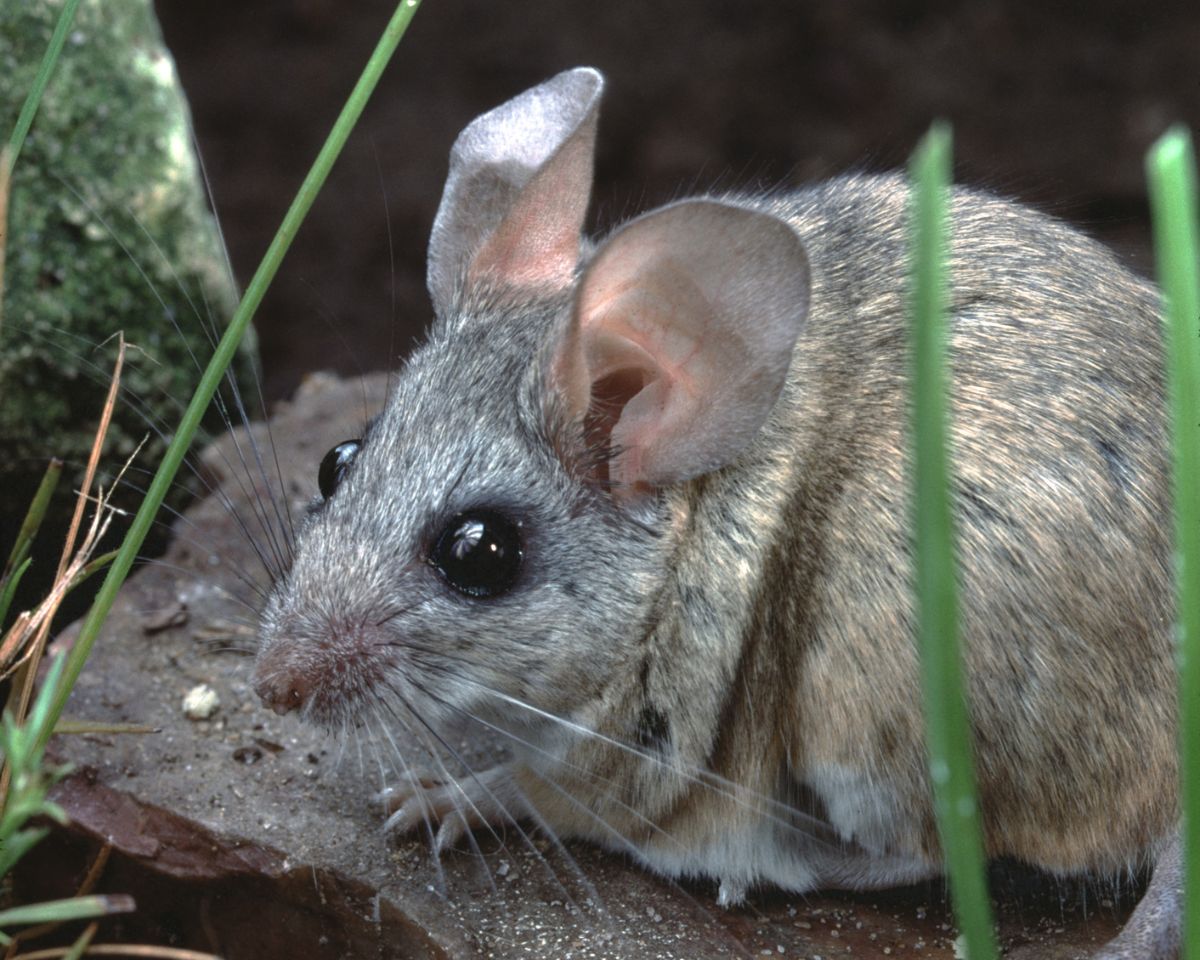
The cactus mouse’s body only measures 8 cm to 9 cm without its tail. The tail is unusually long, adding another 10cm to 14cm. Proportionately, it is the longest tail for a mouse. Scientists believe the desert mouse’s tail length is related to body temperature regulation in desert climate extremes.
The cactus mouse can vary in color from the golden yellow of the subspecies Peromyscus eremicus ermeicus to a dark gray and almost black color. But most of the mice range between a dark gold ochre to cinnamon and gray. The fur on the mouse’s belly and the rest of its underside are generally white. Its tail is usually not hairy, except at the very tip where it may have a slight tuft. The soles of their hind feet are also naked, an unusual trait among other Peromyscus species. Also different when compared to other members of their genus is the cactus mouse’s face and skull. As far as external features go, it has small ears.
The cactus mouse is sometimes called “aggressively solitary” except when mating. It is a nocturnal feeder that is shy yet excitable. They are fast runners, reaching speeds of an average of 13.1kmh. They use their speed to scamper or climb away from predators. The mouse can become physically and mentally inactive during the day and can also control its metabolism in high temperatures and droughts. This enables them to go long periods without water. As solitary creatures, the mice maintain an average territory of 0.8 acres. Sometimes males’ territories overlap each other.
Cactus Mouse Habitat
It may only measure eight to nine centimeters in length without its long, skinny tail, but proportionately, it boasts the longest tail for any mouse around. Scientists believe that this unique feature helps the cactus mouse to regulate its body temperature in the extreme desert climate.
Despite its small size, the cactus mouse has a range of colors, from golden yellow to dark gray and almost black. Most commonly, they are a mix of dark gold, cinnamon, and gray, with a white underside and a tail that is usually not hairy, except at the very tip. Interestingly, their hind feet are also naked, which is unusual among their species. And when you look at their face and skull, they differ from their counterparts, with their small ears giving them a distinctive appearance.
The cactus mouse is shy yet excitable, and it’s known as an aggressively solitary creature, except during mating season. As a nocturnal feeder, it can reach an average speed of 13.1 kilometers per hour, using its agility to scamper or climb away from predators. It can also control its metabolism, staying inactive during the day and surviving long periods without water. These solitary creatures maintain a territory averaging 0.8 acres, sometimes overlapping with other males.
In the dazzling desert landscape, the cactus mouse is a fascinating and unique creature. It’s remarkable how it has adapted to its environment, transforming its body to regulate its temperature, and learning to survive without water. Despite its small size, it’s a creature that demands admiration and respect for its resilience and tenacity in the face of adversity.
Cactus Mouse Predators & Threats

The cactus mouse is found in its natural habitats in the southwestern United States and Mexico. The conservation status of this species is the Least Concern according to the IUCN.
What does the cactus mouse eat?
Oh, the nocturnal feeder is a clever little thing, a true omnivore with a varied palate. They’ll nibble on seeds and vegetation, of course, but they won’t say no to a tasty spider or centipede. Their favourites, though, are fruits, grains, nuts, and blossoms from shrubs, junipers, and mesquites. They’ll even chow down on leaves, grasses, and trefoil. During a dry spell, they’ll turn to succulents for a much-needed source of hydration. And in a pinch, they’ll even resort to nibbling on poison oak!
But that’s not all, my dear friends. This little mouse is quite the clever one. Like a squirrel, they have a keen sense of survival and will hoard food, storing it away for leaner times. Their adaptability and resourcefulness make them true survivors.
And so it goes, in the wide world of nature, each creature has its own way of making do. The nocturnal feeder, with its varied and curious diet, is just one example of the wonderful diversity of life that surrounds us.
What eats the cactus mouse?
The little cactus mouse is certainly not the most imposing of creatures, but it is a vital part of the desert food chain. Its soft, furry body and nimble movements make it a tempting target for predators such as the sly coyote, cunning bobcat, and deadly rattlesnake. Despite this, the mouse has developed some impressive survival strategies.
When threatened, the cactus mouse lets out a high-pitched squeal, alerting both its fellow mice and any nearby predators to its presence. It then scurries away at a pace of roughly 13.1 kmh, using its small but agile body to dodge obstacles and evade capture. If pursued, it can also climb quickly up rocky canyon walls, tree trunks, and other vertical surfaces, seeking refuge in the safety of the high branches.
Though small and seemingly fragile, the cactus mouse embodies the resilience and resourcefulness that define life in the harsh desert landscape. Its ability to adapt and thrive despite the odds is a testament to the power of instinct and the tenacity of nature itself. So the next time you’re out exploring the arid wilderness, keep an eye out for this unassuming but remarkable little creature. You never know what surprises the desert might have in store.
Cactus Mouse Reproduction, Babies and Lifespan
The fascinating world of cactus mice reproduction has been the subject of much scientific inquiry. From January to October, these tiny creatures reproduce at an astonishing rate, averaging 3.5 liters per year. But they can have as many as six litters in these ten months! Much remains to be discovered about cactus mouse mating rituals and reproductive processes, but scientists believe that females become sexually mature at just two months old. It’s still unknown when males reach their own reproductive maturity.
After just 20 to 25 days of gestation, a litter of one to four offspring is born. These precious pinkies, kittens, or pups, as they are adorably called, come into the world without a single hair on their tiny bodies and with their eyes and ears tightly shut. But they don’t stay that way for long! On day one, their hearing opens up, and between days 11 and 15, their eyes finally open to the world. For the first two weeks of life, they nurse from their mother, and by the time they reach five weeks of age, they molt for the first time.
In the wild, the average lifespan of a cactus mouse is just one year. But in captivity, these little rodents can live for an average of 7.4 years! The mysteries of cactus mice reproduction continue to intrigue scientists, and we can’t wait to learn more about these fascinating creatures.
Cactus Mouse Population
Oh my goodness, have you heard about the cactus mice population in the southwestern United States and Mexico? It’s simply astonishing! Over 10,250 population clusters have been counted, and that’s just the beginning. Experts believe the actual population is likely many times larger, as these little critters are both stable and of Least Concern to the IUCN.
It’s truly a marvelous thing to witness such a thriving species in their natural habitat. And we must commend their resilience and adaptability in the harsh desert environment. It’s a testament to the wonders of nature and the intricate balance of ecosystems.
But let’s not forget the importance of preserving and protecting these precious creatures and their habitats. We must do our part to ensure their continued success and longevity. Because as Enid Blyton would say, “Nature is full of surprises, and it’s up to us to cherish and protect them.”
Cactus Mouse FAQs
Are cactus mice carnivores, herbivores, or omnivores?
Cactus mice are fascinating creatures of the night, who are known to dine on a variety of vegetation such as leaves, berries, fruits, nuts, and seeds. However, what truly sets them apart from their herbivore peers is their ability to consume insects as well, making them omnivores of the highest order. These insects, ranging from spiders to centipedes and millipedes, play a pivotal role in the diet of these tiny mammals.
Despite their primarily herbivorous nature, these mice possess a keen palate for the occasional insect or two, which adds a delightful variety to their diet. It is truly remarkable how adaptable these creatures are, and their tenacity in seeking out new food sources is a testament to their resourcefulness. One can only imagine the fascinating world of these nocturnal foragers, scouring the desert floors and feasting on all manner of plant and animal. Truly, nature never ceases to amaze us with its boundless diversity and endless mysteries.
What eats a cactus mouse?
In the vast expanse of the desert, the cactus mice are a small and vulnerable creature. Many predators, such as slithering snakes, wise owls, sharp-eyed hawks, cunning bobcats, sly foxes, and wily coyotes, lurk in the shadows, waiting for their chance to pounce. The life of a cactus mouse is a constant battle for survival in this harsh and unforgiving landscape.
Despite their small size, these mice are mighty in their ability to adapt and thrive in their environment. They scurry and dart through the prickly cactus patches, using their agility and quick reflexes to avoid their predators. They are masters of camouflage, able to blend seamlessly into their surroundings and evade detection.
But even with their impressive survival skills, the cactus mice face an uphill battle against their predators. It is a never-ending game of cat and mouse, with no room for error. In this harsh world, only the strongest and most resilient will survive.
But through it all, the cactus mice endure, a testament to the enduring spirit of life in the desert. They are a reminder that even in the face of adversity, there is always hope and the possibility of survival.
What does the cactus mouse eat?
The nocturnal feeder cactus mouse is a fascinating creature. While they may have a reputation for being insectivores, their daily diet is actually quite varied. They indulge in a delectable array of fruits, grains, nuts, and even blossoms from shrubs. They also have a taste for hackberry nutlets, mesquite beans, pine seeds, juniper seeds, leaves, trefoil, sage, and grasses.
But what makes them truly unique is their ability to adapt to their environment. When food sources are scarce in the fall and winter, they turn to succulents for hydration and even nibble on poison oak. Their resourcefulness is truly admirable.
It’s truly amazing how this small creature can survive on such a diverse diet. Their ability to adapt to their surroundings is a lesson for us all. We should learn to appreciate the abundance of natural resources available to us and strive to make the most of what we have.
How big is a cactus mouse?
The cactus mouse may be diminutive in size, but it more than compensates with its lengthy tail. In fact, while its body measures a mere 8cm to 9cm and weighs a feather-light 0.6oz to 1.41oz, its hairless tail extends an impressive 10cm to 14cm.
This tiny creature’s survival instincts are also noteworthy, as it adapts to its desert habitat by changing its diet when its usual fare becomes scarce in the colder months. These resourceful mice prove that size doesn’t always dictate success in the wild.
Indeed, the cactus mouse embodies the spirit of determination in the face of adversity, reminding us that even the smallest among us have the potential to achieve great things.
How do cactus mice survive in the desert?
In the harsh desert climate, the cactus mouse is a true survivalist. With a plethora of cunning adaptations, they have proven to be adept at outwitting their natural predators. These little critters have a knack for beating the heat by slowing down their metabolisms, thus requiring less water to survive. Additionally, they cleverly lie dormant during the day and take to foraging under the cover of darkness.
But that’s not all, these mice have a unique set of abilities that are perfectly suited for desert living. They can run at breakneck speeds of over 13.1 kilometers per hour, and climb up rock walls and trees with ease. Scientists have even discovered that their long tails play an integral role in regulating their body temperature, making them even more adaptable to their surroundings.
In short, the cactus mouse is the ultimate survivor of the desert. They have evolved in ways that are both fascinating and impressive, proving that sometimes the smallest creatures can be the most resilient. It’s a true testament to the incredible power of nature and the ingenuity of the animal kingdom.