
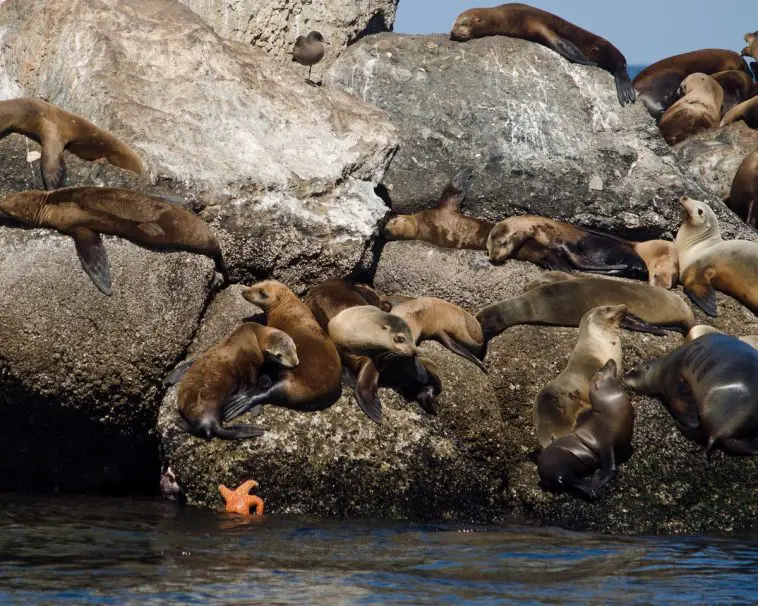
California sea lions, known as “eared seals,” are a cherished species native to the West Coast of North America. They call the coastal waters and beaches, docks, buoys, and jetties home.
These intelligent creatures are quick learners and are often found in zoos and aquariums, delighting audiences with their playful nature and barking dog-like vocalizations.
Thanks to the Marine Mammal Protection Act, these delightful creatures have been protected since 1975, and their population has been steadily increasing.
The MMPA safeguards marine mammals like the California sea lion by prohibiting hunting, harassment, and capture. This legislation has been vital in ensuring the survival of these beloved creatures.
California sea lions are a testament to the beauty of the natural world and a reminder of the importance of protecting our environment for future generations.
Their joyful spirit and intelligence serve as a reminder that we share this planet with incredible creatures deserving of our respect and protection. May we continue to appreciate and safeguard the magnificent creatures that call our planet home.
California Sea Lion Facts For Kids
- California sea lions live on the Pacific coast.
- They are marine mammals called pinnipeds.
- Males are larger than females.
- They have strong flippers for swimming.
- Sea lions eat fish and squid.
- They’re social animals and live in groups.
- California sea lions are skilled divers.
What Do California Sea Lions Look Like
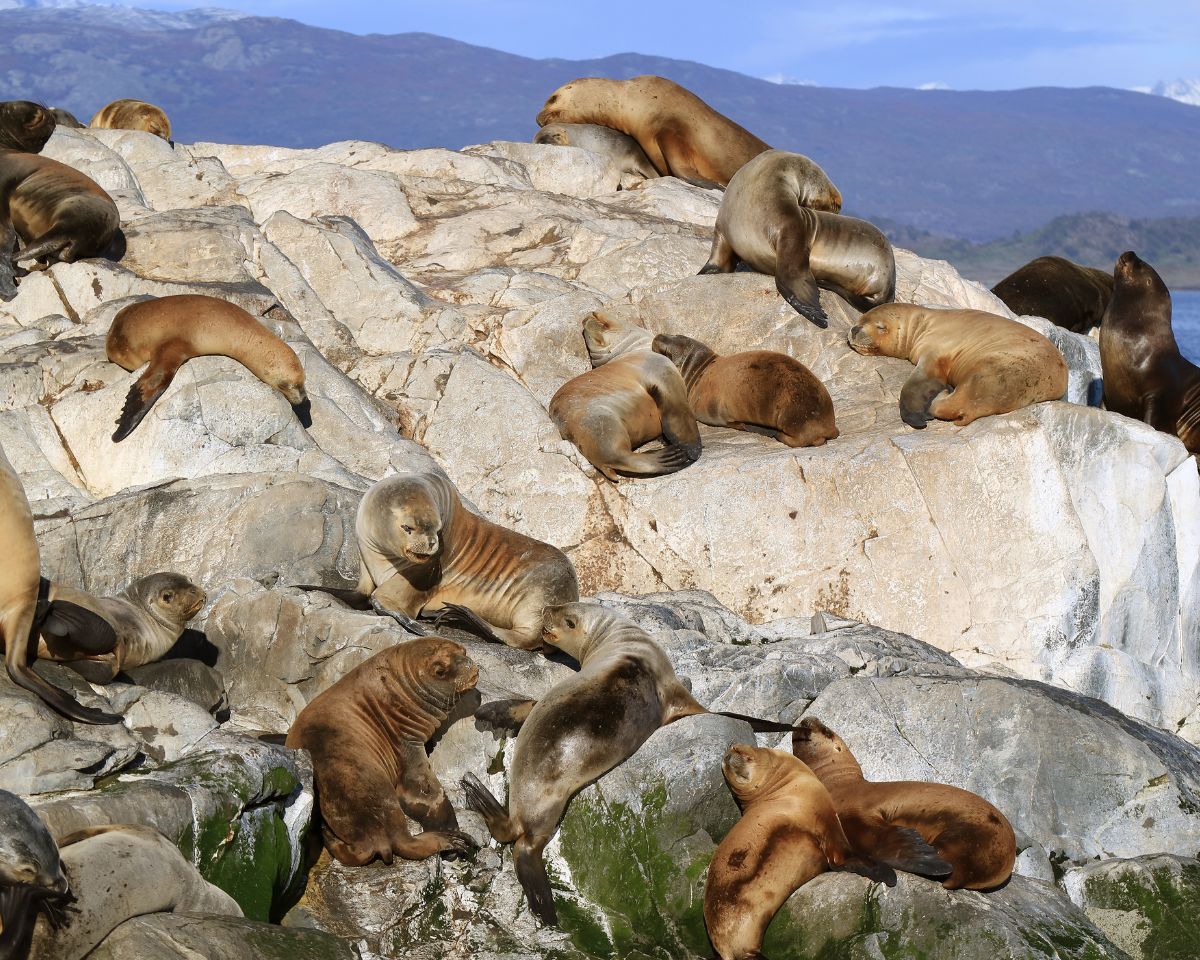
Adult females and juveniles exhibit a slender physique and boast a blonde to the tan color palette. Oppositely, adult males are typically larger than their female counterparts and sport a darker brown to black hue.
Pups, born with dark brown fur, start at a weight of roughly 16 pounds. When they reach four to five months of age, they shed their dark brown coat for a lighter brown or silver coat.
California sea lions feature broad front flippers and elongated, narrow snouts. Mature males, along with subadults, boast a pronounced forehead crest adorned with tufts of lighter hair. These marine creatures possess visible ear flaps and hind flippers equipped with three to five claws.
In terms of physical traits, it’s easy to see how California sea lions stand apart from other members of the animal kingdom.
Their slender frames and unique coloration make them a sight to behold. Plus, their long snouts and broad flippers give them an edge in the water, allowing them to glide gracefully through the ocean waters.
Despite their impressive physical features, these sea lions are also fascinating from a behavioral standpoint.
They’re incredibly intelligent creatures, capable of complex communication and problem-solving skills.
Additionally, their social structures are intricate and dynamic, with tight-knit communities forming within groups of sea lions.
What Do California Sea Lions Eat
California sea lions are fascinating creatures that feed mainly offshore in coastal areas.
They are known to have a diverse diet that includes squid, anchovies, mackerel, rockfish, and sardines, all of which can be found in upwelling areas.
However, they have a notorious reputation for raiding commercial and sport fishing gear, as well as fish passage facilities at dams and rivers.
These social animals are quite a sight to behold, but during the breeding season, the males become quite territorial and aggressive in defending their space.
The females, on the other hand, fight fiercely to protect their pups. It’s interesting to note that California sea lions are incredibly skittish of humans when on the breeding islands and will dart into the water if they detect any scent or sight of people around.
Another fascinating aspect of these creatures is their communication.
Male sea lions bark like dogs to communicate with other males and females, while females and pups use vocalizations unique to their kind.
Every pup and female has a distinct scent that identifies them, and a female can find her pup among hundreds of others using her pup’s vocalization. Interestingly, she smells it as a final check once she finds her pup.
One behavior unique to California sea lions is called “rafting.” It’s where a sea lion holds its flippers above the water for a long time, motionless, to rest and regulate its body temperature.
To the untrained eye, it can look like the sea lion is stuck in a net or buoy gear. However, if there is no gear visible, the sea lion is most likely rafting.
Where Do California Sea Lions Live

California sea lions are a charming bunch of marine creatures, known to prefer frolicking in the shallow waters of the eastern North Pacific Ocean.
Sandy beaches and rocky coves make for excellent haunts for breeding and hauling-out sites. However, they’re not shy of marina docks, jetties, and buoys either.
These creatures are found in waters ranging from southeast Alaska to the Pacific coast of central Mexico.
These gentle giants have a preferred breeding range from the Channel Islands in southern California to central Mexico.
The population is divided into three stocks by NOAA Fisheries, namely the United States, western Baja California, and the Gulf of California, based on the location of major rookeries and the international border. The U.S. stock waters range from the U.S./Mexico border to Canada.
During winters, the male California sea lions migrate to the feeding areas of California, Oregon, Washington, British Columbia, Canada, and southeast Alaska, while females and pups stay near the breeding colonies until the pups are weaned.
In warm water (El Niño) years, some females may be sighted as far north as Washington and Oregon, presumably following prey.
The California sea lions are a delight to observe as they waddle their flipper-like flippers across the shore.
These lovable creatures can be seen lounging on the beaches, basking in the sun. Their curious nature and playful attitude make them a popular attraction in various marine parks and tourist areas.
The California sea lions are known for their vocalizations, which range from loud barks to soft groans, making it easier to spot them.
Lifespan & Reproduction
Males of the sea lion species are known to be “polygamous,” claiming their own breeding territories that can host up to 14 females at a time.
Their territoriality is fiercely guarded through aggressive physical displays and vocalization. It takes around 4 to 5 years for sea lions to reach sexual maturity, but they don’t become socially mature until much later, typically around 9 to 12 years old.
The breeding season lasts from late June to early August, and most pups are born from May through June. Females are ready to mate again three to four weeks after giving birth, making them quite prolific breeders.
To sustain their growing population, California sea lions separate their nursing and feeding activities. A mother sea lion nurses her pup for 1 to 2 days, and then leaves the pup ashore while she goes to feeding areas at sea.
She spends 2 to 5 days feeding and then returns to the nurse. During the mother’s absence, the pup does not eat. This nursing pattern continues until the mother weans her pup, which takes almost a year.
If you come across a pup on the shore, please leave it be. If it seems to be in danger, contact your local marine mammal stranding network member.
Sea lions are fascinating creatures that have captured the attention of many researchers over the years.
Their mating habits, specifically their polygamous nature, have been the subject of scientific inquiry for decades. It is interesting to note that these animals are known for their aggressive physical displays and vocalizations used to protect their territories.
Even more so, their prolific breeding patterns are a testament to their drive for survival.
To ensure that the California sea lion population continues to thrive, it is important to respect their nursing and feeding patterns.
The separation of these activities is not only beneficial for the mother and her pup but for the entire population.
As one of nature’s most resilient creatures, the California sea lion’s continued success lies in the hands of those who appreciate and respect their unique lifestyle.
Threats
Entanglement
California sea lions are facing a grave danger – getting caught in fishing gear. They can easily become entangled in various types of gear, such as traps, pots, and gillnets.
Once they are ensnared, they may have to struggle and swim with the attached gear, which can lead to exhaustion, impeded feeding ability, and severe injury.
These factors can ultimately result in decreased reproductive success and even death. It is a serious situation that demands our attention and action.
The plight of the California sea lion is a growing concern. The potential for them to become ensnared in fishing gear is a danger that cannot be ignored. The consequences of getting caught are severe and long-lasting.
These creatures have to fight to stay alive, and it is our responsibility to ensure their safety.
It is our duty to protect California sea lions from the hazards of fishing gear. We must be vigilant and take precautions to minimize the chances of entanglement.
For example, using alternative fishing methods or placing warning devices on gear can help prevent entanglement.
We must also be prepared to take swift action in rescuing and rehabilitating sea lions that have become ensnared.
Biotoxins from Harmful Algal Blooms
Under certain circumstances, algae can rapidly flourish. These blooms can generate harmful toxins that may result in the demise of fish, wildlife, and birds.
In severe situations, these toxins can even cause illness or death among humans.
California sea lions are high-level predators, making them susceptible to accumulating these harmful toxins in their system. This accumulation can lead to seizures or even death as a result of domoic acid poisoning.
Human-Caused Injuries and Mortalities
California sea lions are a delightful sight in the wild, but their easy accessibility puts them at greater risk of injury and death due to human-related incidents.
Offering them food or attempting to do so does more harm than good, as it alters their natural behaviors and makes them less wary of humans and vessels.
This often leads to them associating people with an easy meal, which changes their hunting practices and may result in them stealing bait directly from fishing gear.
Unfortunately, this behavior often results in retaliation from frustrated boaters and fishermen, such as shooting.
The presence of humans and watercraft can also cause disturbance and harassment to these adorable creatures.
Harassment occurs when any act of pursuit, torment, or annoyance may disrupt their behaviors or cause injury, and it’s against the law.
To ensure the safety of both yourself and the California sea lions, it’s vital to share the shore with them and respect their natural habitat.
Let’s work together to ensure the well-being of these charming creatures by following the laws and regulations established to protect them.
Remember, feeding them or attempting to do so only causes more harm. Instead, let’s appreciate and admire them from a distance, preserving their natural behaviors and hunting practices.
By respecting their habitat and natural tendencies, we can help guarantee that California sea lions thrive in the wild for years to come.