
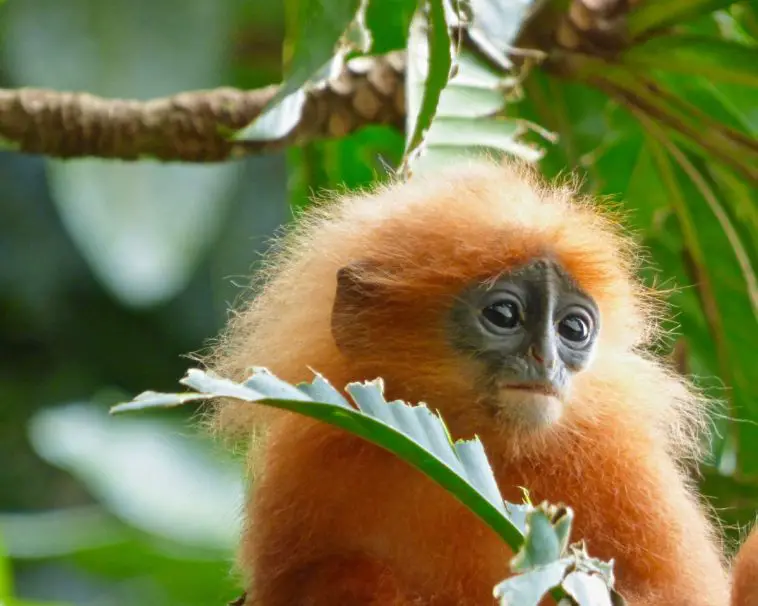
Maroon-leaf monkeys are primates that live in the tropical rainforests of Southeast Asia. They are known for their distinctive red-brown fur and white markings on their faces and tails.
These monkeys are herbivores and primarily eat leaves, fruits, and flowers. They live in social groups and communicate through vocalizations and body language.
Maroon Leaf Monkey Facts for Kids
- Maroon-leaf monkeys live in Southeast Asia.
- They’re also known as red langurs.
- Their fur is maroon-red with white patches.
- They mainly eat leaves, fruit, and seeds.
- Maroon-leaf monkeys live in social groups.
- They’re skilled climbers and jumpers.
- Their habitat is threatened by deforestation.
Habits and Lifestyle
These fascinating creatures spend the majority of their time dwelling in the lofty branches of trees, rarely ever stepping foot on the ground below. They are gregarious beings, finding comfort in groups consisting of 2 to 13 individuals. Interestingly, it is the dominant male who leads each group with an authoritative air.
Territorial by nature, these monkeys are quick to chase away any intruders who dare to encroach upon their home range. The males, in particular, are quite vocal, producing loud calls that are used to claim their territory and warn their rivals to stay away. With their active nature, they tend to be busy foragers, spending their days eating to their heart’s content and resting when they’re not on the move.
To put it in simpler terms, these monkeys are arboreal creatures and live in social groups. The leader of each group is a male who makes it his responsibility to keep everyone in line. They are very protective of their home range and will not hesitate to chase off any trespassers. Their vocal calls are a warning to rivals that they mean business. During the day, they are quite busy foragers, taking breaks now and then to rest.
Diet
Their diet consists of fruits, seeds, young leaves, and flowers. In the event of food scarcity, consumption of specific plants or seeds may occur during periods of abundance.
What type of animal is a maroon leaf monkey?

The maroon leaf monkey, belonging to the Macaca genus in the primate family, is indigenous to Southeast Asia. This fascinating creature is classified as an Old World monkey and goes by multiple names, including the red leaf monkey, red longhair macaque, and maroon langurs.
What class of animal does a maroon leaf monkey belong to?
The maroon leaf macaque, a fascinating primate species, is classified under the order Primates, which comprises a diverse range of other primates such as langurs. These intelligent creatures are known for their impressive cognitive abilities and social behavior.
Inhabiting the lush rainforests of Southeast Asia, the maroon leaf macaques are remarkable creatures that possess distinctive maroon-colored fur coats. With their expressive faces, agile movements, and playful antics, these primates capture the hearts of nature enthusiasts and researchers alike.
Despite being relatively small in size, these primates are incredibly intelligent and possess an intricate social structure. They have a well-developed communication system that involves various vocalizations, body language, and grooming behaviors. These primates also use tools, such as sticks and rocks, to obtain food and engage in other activities.
The maroon leaf macaque is a vital component of the ecosystem as they feed on various fruits, seeds, and insects, contributing to the dispersal of seeds and pollination of plants. Unfortunately, habitat loss and fragmentation pose a significant threat to their survival, as well as hunting for their meat and the illegal pet trade.
Where does a maroon leaf monkey live?
The charming red-leaf monkey, scientifically known as Macaca fascicularis, is a delightful Old World monkey that can be found scampering through the lush forests of Southeast Asia. This monkey is one of the two species of macaque monkeys that are indigenous to the tropical paradise of Indonesia and Malaysia.
These omnivorous primates are true foodies and have a passion for munching on a variety of delicious treats like ripe fruits, fresh leaves, fragrant flowers, and crunchy insects. They have the taste buds of a gourmet chef and are always on the lookout for their next culinary adventure.
The red-leaf monkey is a social butterfly and loves spending time with its friends. These adorable creatures live in large groups called troops, each consisting of approximately 20 individuals. These troops are very close-knit and stick together like glue all year round. They are a true family in every sense of the word.
These lively monkeys have a large territory to call their own, ranging from 5 to 20 square kilometers. These territories are vast and filled with towering trees, sparkling streams, and exotic vegetation. The red-leaf monkey loves nothing more than to frolic and plays in its very own playground.
What is a maroon leaf monkey’s habitat?
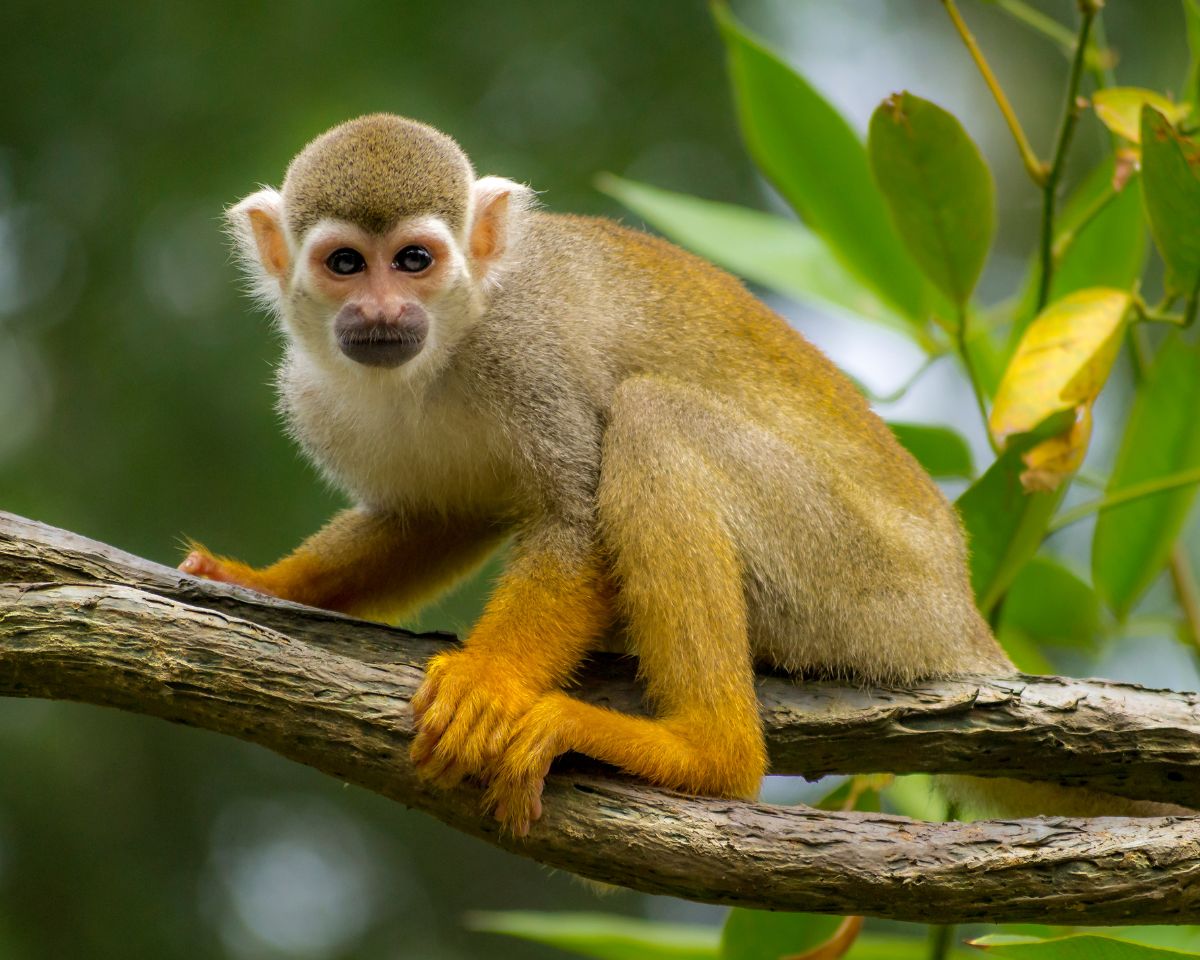
Maroon-leaf monkeys are fascinating primates that thrive in tropical rainforests. The lush greenery and abundance of fruit and tree leaves provide the perfect habitat for them to flourish. These charming creatures are known to live in groups of up to 30 individuals, making them highly social animals.
In addition to tropical rainforests, maroon-leaf monkeys can also be spotted in a range of other habitats such as primary and secondary lowland forests. They are also known to thrive in swamp forests, where the damp conditions are perfect for their needs.
The maroon-leaf monkey’s diet primarily consists of fruits and tree leaves, which they forage for in the dense foliage of their habitat. These primates are known for their resourcefulness and ability to adapt to their surroundings. With their keen sense of smell and sharp eyesight, they are able to locate food sources quickly and efficiently.
As unique creatures that are only found in certain parts of the world, maroon-leaf monkeys are highly valued for their ecological significance. They play a vital role in maintaining the balance of their ecosystems by spreading seeds and acting as pollinators.
It’s not only their ecological significance that makes maroon-leaf monkeys so special. They have a rich social life, with complex relationships and communication within their groups. These bonds are formed through grooming, vocalizations, and other forms of social interaction.
Who does a maroon leaf monkey live with?
Red leaf monkeys, much like their primate counterparts, thrive in the company of others. A typical group usually ranges from 2 to 13 members, is primarily composed of males. However, male dominance is not without its share of clashes, and territorial disputes often lead to aggressive behavior. In the event of a group disbanding, sub-groups are formed, leading to smaller units of companionship.
In the bright light of day, these groups may divide themselves into two or more sub-groups, offering diverse opportunities for interaction and socialization. Despite the occasional disputes, red leaf monkeys are highly social animals, and their interactions are fascinating to observe.
The male-dominant hierarchy and territorial disputes are natural traits of the red-leaf monkey, but it does not negate the depths of their social connectivity. The smaller sub-groups within a group allow for closer bonds and a more intimate understanding of each other’s behavior. As social animals, they rely on each other for support and defense, creating a tight-knit group dynamic.
Red leaf monkeys are often observed grooming each other, which not only helps with hygiene but also fosters a sense of community. The grooming process strengthens bonds and reinforces alliances, a necessary aspect of group survival. As the day progresses, interactions are an essential aspect of their daily routine, and they engage in activities such as playing, exploring, and foraging together.
How long does a maroon leaf monkey live?
In the wild, their lifespan can reach up to 20 years, but research suggests that deforestation has led to a decrease in their life expectancy.
How do they reproduce?
These delightful monkeys practice a monogamous mating system, meaning a pair typically consists of a handsome male and a lovely female who mate for life. A group typically includes only one adult male who is the lucky mate of multiple adult females. Each female joyfully gives birth to one adorable baby each year.
The young males remain with the group until they reach sexual maturity, at which point they set out to find their own love and join another group. They often travel far and wide between groups, experiencing all the joys and wonders of the jungle. It may take up to two years for a young male to reach sexual maturity.
What is their conservation status?
According to the International Union for Conservation of Natural Resources (IUCN), their small population size makes them vulnerable.
What does the maroon leaf monkey look like?
The maroon leaf monkey, an intriguing primate with a distinctive appearance, is easily recognizable by its striking red fur that envelops its entire body. With hair covering its arms and legs, these monkeys are truly unique in their own right.
Not only do they possess a striking appearance, but maroon-leaf monkeys are also incredibly agile. They can leap great distances into the air, showcasing their impressive physical prowess. In contrast to their small faces, their jaws are relatively large, giving them a somewhat unusual look. Additionally, their thumbs are comparatively small compared to other primates, making them even more fascinating to observe.
It’s no wonder that the maroon leaf monkey is a popular subject of fascination among animal enthusiasts. With their distinctive red fur and agile movements, they are a spectacle to behold. Their small faces and large jaws add a touch of intrigue to their already unique appearance. And of course, their small thumbs only add to their overall charm.
Indeed, the maroon leaf monkey is truly an enigmatic creature. They are a testament to the incredible diversity of the animal kingdom, showcasing the wonders of evolution and adaptation. Their striking appearance and remarkable agility will continue to captivate the hearts and minds of animal lovers for years to come.
If you ever have the opportunity to observe a maroon leaf monkey in its natural habitat, take the time to do so. These captivating primates are worth the effort and time, as they will leave you in awe of their beauty and grace. With their striking red fur and unique physical characteristics, they are truly a sight to behold.
How do they communicate?
Their primary method of communication is through calls, with the leader of the pack having a particularly loud call that serves as a warning to intruders. It is a well-known fact that these primates are highly territorial and do not take kindly to outsiders.
In addition to calls, the Maroons also use touch to communicate. This is an important way for them to show affection and reinforce social bonds. Grooming is another way that the monkeys maintain strong relationships within their pack. It is a process that not only keeps them clean but also helps them to bond and relieve stress.
The Maroons are fascinating creatures that have developed complex social structures and methods of communication. Their calls and touch are a testament to their intelligence and emotional complexity. The leader’s loud call is a signal of the pack’s strength and unity, while grooming is a way to keep the social fabric of the group strong.
Their communication methods are not just for survival, but also for enjoyment. The Maroons are known to play and engage in social activities, such as wrestling and chasing each other. These activities serve as a form of recreation, as well as a way to strengthen their social bonds and reinforce the hierarchy within the pack.
How big is a maroon-leaf monkey?
The langur and colobus monkeys are two species that differ in body structure. The langur is typically smaller with an average head-body length ranging from 16-22 inches, whereas the colobus monkey boasts a longer body length of up to 30 inches. It’s fascinating to observe the differences between these primates and how they’ve adapted to their environments.
Langurs are known for their agile movement and dexterity, allowing them to navigate through dense forests with ease. They possess long tails that they use for balance and communication with other langurs. On the other hand, colobus monkeys have a unique adaptation in the form of a thumb-less hand. This helps them to maintain their balance while jumping between trees in their natural habitat.
What do they eat?
The diet of the maroon leaf monkey, being a herbivore species, primarily comprises young leaves, seeds, fruits, and flowers that flourish in the forests and their natural habitat. During the rainy season, which spans from June to September, these monkeys mostly rely on seeds for sustenance.
Being arboreal creatures, they prefer to dwell in the treetops and spend the majority of their time moving between trees rather than on the ground. Their unique lifestyle makes them stand out from other species in the forest, and their preferred mode of transportation is swinging from branch to branch, a sight that is truly captivating to witness.
Are they dangerous?
They may be harmless to humans and their herbivorous nature makes them less prone to aggression towards other animals, but it is crucial to treat them with the utmost respect as they are still wild creatures.
The maroon leaf monkey’s defense
The maroon-leaf monkey, a fascinating creature with a unique social structure, has a clever defense mechanism that involves making a loud noise to alert its family members and warn intruders that they are trespassing. This vocalization not only serves as a warning of potential threats but also establishes the monkey’s territorial boundaries.
With a predominantly male social structure, the maroon-leaf monkey’s defense strategy is effective in ensuring the safety of its family. In some cases, these primates may even resort to physical confrontations to protect their territory.
In the wild, the maroon-leaf monkey is constantly on guard and prepared to defend itself against any potential threats. It is remarkable to see how these primates have evolved to develop such intelligent defense mechanisms to ensure their survival.
As a species, the maroon-leaf monkey serves as an inspiration for how we can adapt and evolve to protect ourselves and those we care about. We can learn from their strategies and apply them to our own lives, whether it be in defense against physical threats or protecting our personal boundaries.
Through the maroon-leaf monkey’s unique defense mechanisms, we can understand the importance of being mindful and vigilant in our surroundings. We can also learn the value of communication and cooperation in protecting ourselves and our loved ones.
Overall, the maroon-leaf monkey is a fascinating creature with a lot to offer in terms of defense strategies and survival techniques. By studying their behavior and adapting their tactics to our own lives, we can become more resilient and prepared for any challenges that may arise.