
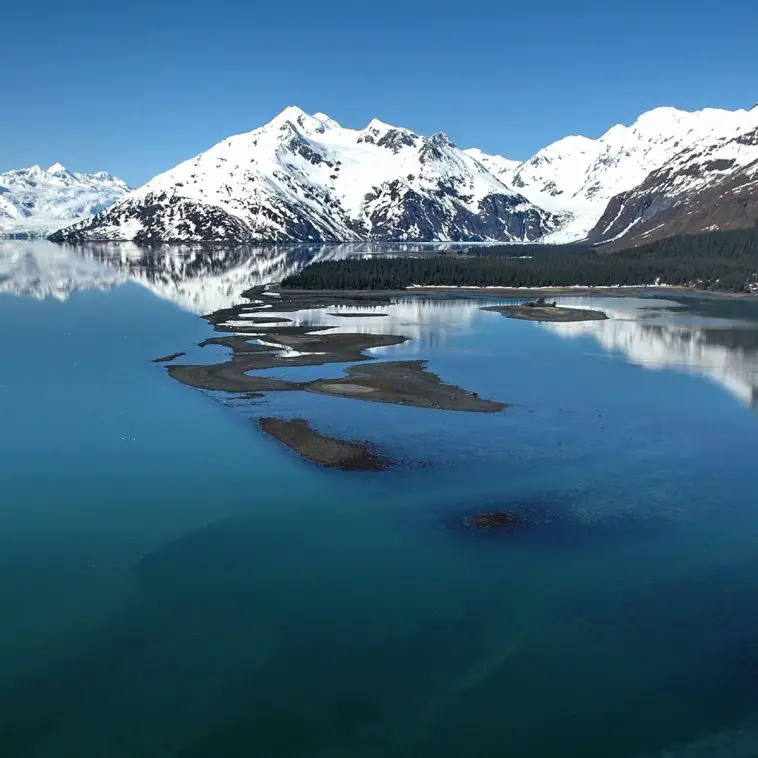
The U.S. purchased Alaska from Russia in 1867 for just two cents an acre, a purchase that proved to be a good investment when oil and gold were discovered there. Alaska is the biggest U.S. state. Home to thousands of species of animals including: Polar Bears, Moose, Brown Bear, Black Bear, Mountain Goat and Caribou. It has more forest than any other state. Few humans live there though and it is considered one of the last truly wild places in the U.S.
Alaska Facts for Kids
- Alaska is the largest state in the U.S. by area.
- Its capital is Juneau, but the largest city is Anchorage.
- It’s known for its cold, snowy weather.
- The highest peak in North America, Denali, is in Alaska.
- Alaska became a U.S. state in 1959.
- It’s famous for wildlife like grizzly bears and moose.
- The Iditarod Trail Sled Dog Race starts in Alaska.
- Many people fish for salmon here.
- It’s known for the Northern Lights.
- Alaska has about 100,000 glaciers.
Denali National Park and Preserve
Denali National Park and Preserve, in Alaska, spans over six million acres and is home to North America’s tallest peak, Denali. The park has diverse landscapes, such as taiga forests, tundra, and glaciers, and features wildlife like grizzly bears, moose, caribou, and Dall sheep. Kids can engage in interactive learning experiences about Alaska’s history, indigenous cultures, and environmental conservation through visitor centers, ranger-led programs, and the Alaska Railroad.
Alaska Native Cultures
Alaska is home to a rich variety of Native cultures, with indigenous peoples thriving in the region for thousands of years. These Alaska Native people consist of eleven distinct groups, such as the Inupiat, Yupik, Aleut, Tlingit, Haida, and Tsimshian, each with unique languages, traditions, and lifestyles. They have a deep connection to the land, focusing on hunting, fishing, and gathering from abundant resources.
Their art, craftsmanship, and storytelling have been passed down through generations, preserving their heritage and providing valuable insights. Today, Alaska Native traditions are celebrated and shared through community events, museums, and cultural centers, allowing people to learn about and appreciate their importance in Alaska’s history.
Iditarod Trail Sled Dog Race
One exciting event in Alaska is the Iditarod Trail Sled Dog Race, which teaches children about the state’s culture and history. Held annually in March, this race covers around 1,000 miles from Anchorage to Nome. Teams of mushers and sled dogs navigate challenging terrains, facing extreme conditions.
The Iditarod race commemorates the bravery of mushers and sled dogs who delivered life-saving serum to Nome in 1925. Known as the ‘Last Great Race on Earth,’ the Iditarod highlights the bond between mushers and dogs, and the resilience needed to conquer Alaska’s wilderness.
Alaskan Wildlife
Alaska offers a wonderland for wildlife enthusiasts, with a variety of animals inhabiting its vast landscapes. Children will be amazed by majestic moose, playful sea otters, and the famous 1,500-pound Alaskan brown bear. Other species include caribou, Dall sheep, and mountain goats.
The state’s waters are home to humpback whales, orcas, and salmon, while its skies showcase bald eagles and migratory birds. Alaska’s incredible wildlife makes it an awe-inspiring destination for all ages.
Alaska Oil and Gas Industry
Alaska is known for its stunning landscapes, diverse wildlife, and significant oil and gas industry. This sector plays a crucial role in the state’s economy and offers many job opportunities. Prudhoe Bay, the largest oil field in North America, is a vital production location.
The Trans-Alaska Pipeline System carries oil over 800 miles to Valdez for shipping across the US. Natural gas is another key resource, and the Alaska LNG Project aims to transport it globally. These resources support Alaska’s economy and contribute to the nation’s energy needs.
Alaskan Wilderness and Outdoor Activities
Alaska, known as ‘The Last Frontier,’ is a haven for children who enjoy exploring nature. This vast state contains pristine wilderness areas, offering numerous opportunities for outdoor adventures and wildlife encounters. Kids can appreciate Denali’s majesty, North America’s tallest peak, and national parks like Glacier Bay and Kenai Fjords, where they can observe glaciers and various wildlife.
Activities such as hiking, fishing, kayaking, dog sledding, and gold panning are available. Extended daylight hours in summer allow for more outdoor fun, while winter offers the chance to witness the Northern Lights.
Juneau, Alaska
Juneau, Alaska, is a unique city with fascinating facts for kids to discover. As Alaska’s capital, it has a rich history and stunning natural beauty. Located between the Gastineau Channel and Coast Mountains, Juneau is only accessible by boat or airplane. This remote location allows exploration of Alaska’s wilderness and wildlife, such as bears, eagles, and whales.
The Mendenhall Glacier, stretching over 13 miles long, is a must-see attraction. Juneau’s cultural heritage includes the Tlingit people, with their art and traditions still visible in the city. Overall, Juneau offers kids an educational experience, teaching them about the state’s history, culture, and natural wonders.
Alaskan Gold Rush History
The Alaskan Gold Rush was a significant event in Alaska’s history, beginning in 1896 when gold was discovered in the Klondike region of the Yukon Territory. Thousands of prospectors traveled to Alaska in search of fortune and a better life, enduring harsh weather and treacherous terrain. Towns like Skagway and Dawson City were established to support miners and their families.
The Gold Rush brought population growth and economic development to Alaska but also had negative effects on the environment and local Indigenous communities. Today, historic Gold Rush sites are preserved as reminders of this exciting chapter in Alaska’s past, teaching children about perseverance and determination.
Alaskan Seafood Industry
Alaska hosts a diverse and abundant seafood industry, offering insight into fishing and marine life. The cold waters are home to various fish, shellfish, and marine creatures, supporting a thriving industry. Alaska produces over half of the seafood caught in the United States, including popular favorites like salmon, halibut, crab, and shrimp.
Sustainable fishing practices are prioritized, ensuring a healthy marine ecosystem for future generations. The industry also provides employment for thousands of Alaskans in fishing, processing, and related jobs. Alaskan seafood is sourced from a unique and eco-friendly industry.
Alaskan Climate and Environment
Alaska is known for its unique climate and diverse environment, which can be both fascinating and educational for kids. The state experiences extreme weather conditions, including cold winters and mild summers. In some parts, temperatures can drop to -80 degrees Fahrenheit in winter. Coastal areas have a milder climate due to the ocean’s warming influence. Alaska is home to various ecosystems, from forests and tundras to glaciers and icy mountains.
This environment supports a wide range of wildlife, including polar bears, moose, caribou, whales, and seals species. The state’s wilderness and unique climate make it an ideal location for scientists to study climate change and other environmental topics. For kids, learning about Alaska’s climate and environment is a great way to understand the natural world and the importance of protecting and preserving it for future generations.
Fun Facts
- Alaska borders Canada to the east and the Bering Sea and the Arctic Ocean to the west and north. At one point, it lies just 55 miles from Russia.
- More American Indians live in Alaska than any other state. The name Alaska comes from the word Alyeska, an Aleut Indian word that means great land.
- Alaska is one of the leading producers of oil and natural gas in the U.S. Millions of gallons of petroleum products are produced here every year. Conservationists worry about the long-term environmental consequences if this industry.
- Alaska has short summers and long, cold winters. For several months, the sun does not shine at all. During the summer months, the sun doesn’t set. During these months, people stay up late. Children play outdoors at midnight. And garden vegetables become huge because of the extra sunlight they get.
- The Tongass National Forest is the largest U.S. national forest.
- Humpback whales migrate to Alaskan waters during the summer months in search of food. These whales eat hundreds of fish in one bite.
- Alaska is one of the leading U.S. producers of seafood.
Alaska Quick Stats
Population: 710,231
Capital: Juneau (population, 31,275)
Largest city: Anchorage (population, 291,826)
State bird: willow ptarmigan
State flower: forget-me-not

Questions and Answers
Question: Do people in Alaska live in igloos?
Answer: The Aleut people sometimes still live in igloos, but most people live in modern homes.
Learn More
Watch a short video about Alaska.